

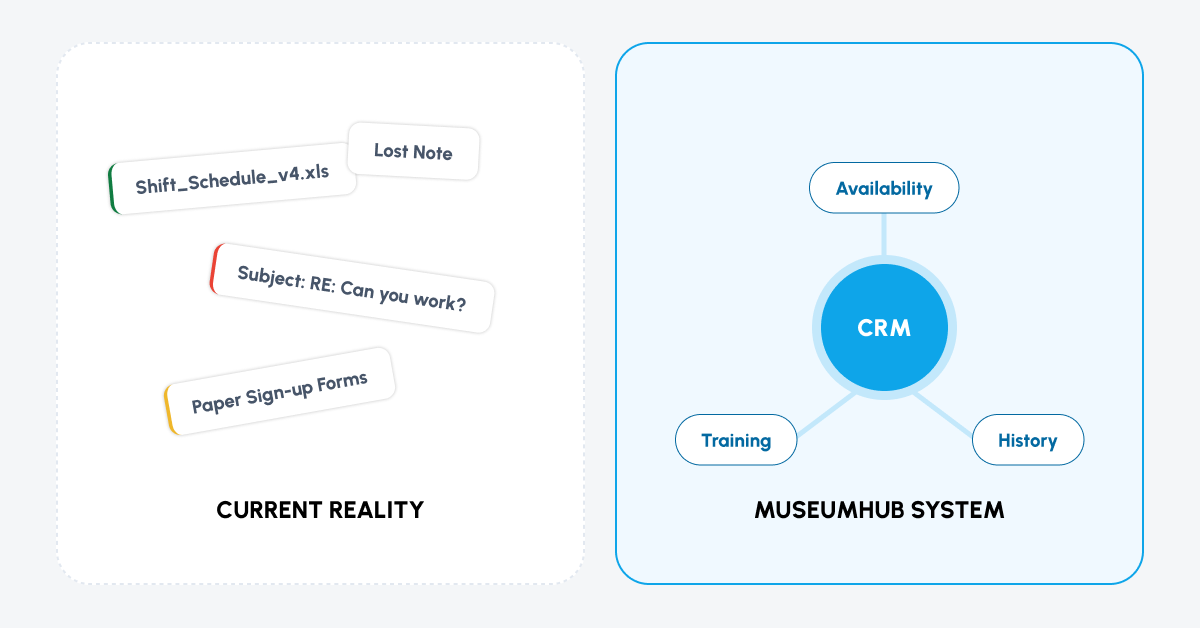
Ask anyone running programs, and the answer is usually the same: coordinating volunteers eats up more time than it should. Shifts are often isolated in spreadsheets, while schedules live in email inboxes. It is all too easy for details to go missing when staff turnover happens or when multiple departments try to share the same list.
Volunteers are an essential thread of a museum’s diverse fabric of daily operations, and they deserve better.
While these are old problems, they are becoming harder to ignore. Volunteers want clear updates, leadership wants clean data, and event staffing needs to remain flexible. By using a CRM, museums aren't just organizing names. They are linking availability and training in a central place. This allows teams to spend less time on administration and more time on the programs themselves.
The data shows why structured volunteer management matters and how centralized systems improve both engagement and efficiency.
The Volunteer Management Challenge Museums Face
Over 60% of U.S. cultural institutions rely on volunteers for daily operations
Volunteer onboarding often starts strong, then breaks down in follow-up. Museums might collect sign-up forms at events, then lose track of where someone is in the process. Did they attend orientation? Have they completed training? Are they active? CRM systems keep those details in one place so staff don’t have to dig through emails or guess who’s ready to be scheduled.
Volunteer engagement is projected to drop 11% globally by 2025
Not every volunteer wants the same shift, role, or frequency. When everyone gets the same blast email, engagement drops. CRM tools let museums filter by availability, interest, or past involvement so the right people hear about the right opportunities at the right time. The result: fewer no-shows, clearer responses, and better coverage across programs.
CRM-Driven Volunteer Recruitment and Engagement
Centralized volunteer data improves onboarding and communication
CRM systems allow museums to manage volunteer profiles, onboarding steps, training completion, and shift history in one place. This structure reduces repetitive outreach and ensures new volunteers receive timely, relevant information without relying on manual follow-ups.
Segmented communication increases volunteer participation
When volunteers are segmented by role, availability, or event type, communication becomes more precise. Targeted updates replace mass emails, reducing confusion and improving response rates across shifts and programs.
Event Management Depends on Volunteer Coordination
Events represent a growing revenue opportunity for museums
Exhibition openings, evening galas, and multi-program family events often account for a significant portion of annual revenue. But they only work when volunteers show up where they’re needed. As programming scales, so does the need for tighter coordination. A 15% projected rise in event revenue means more visitors, more logistics, and more pressure to get staffing right the first time.
Automated reminders improve attendance and reliability
Even committed volunteers forget shift times when reminders get buried in inboxes. CRM workflows automate confirmations, day-before nudges, and thank-you follow-ups, all synced to the volunteer’s actual schedule. That means fewer last-minute scrambles and more consistent coverage, without chasing people down one by one.
Centralized Ticketing and Volunteer Visibility
Connecting ticketing and volunteer schedules improves staffing clarity
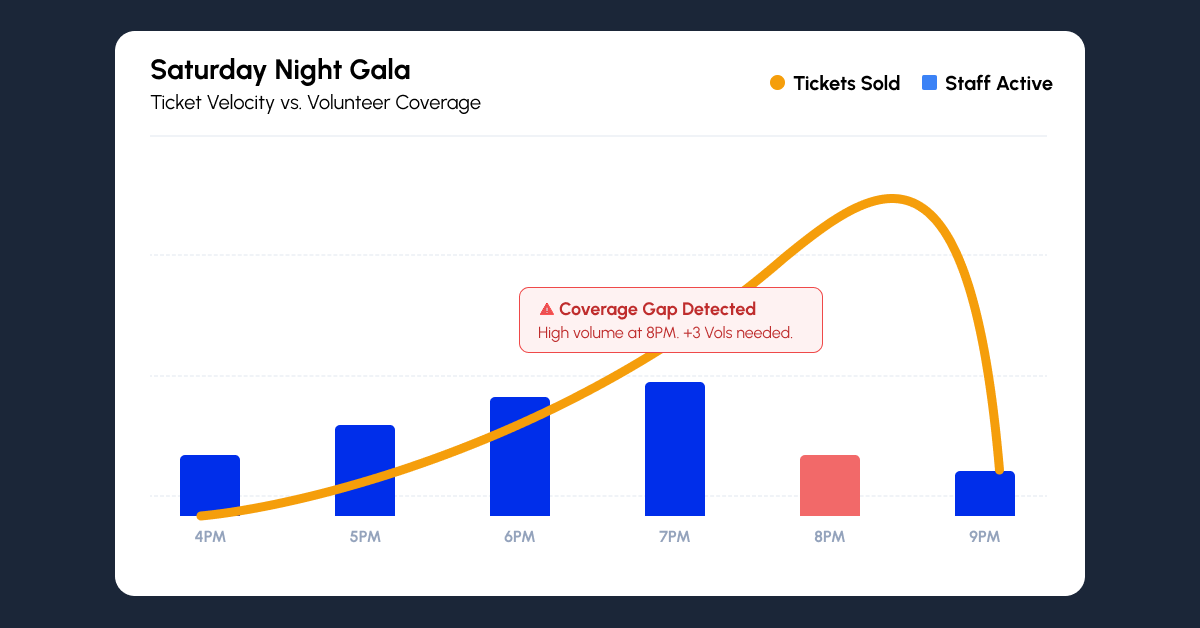
In larger museums, ticketing and staffing often operate on separate tracks. When those systems don’t talk to each other, it’s harder to spot where coverage is light or where too many volunteers were scheduled for the same shift. When ticket sales and attendance data connect to volunteer schedules, staff get a real-time view of demand and coverage. That makes it easier to adjust before the doors open.
Unified reporting supports operational decision-making
Leadership teams want clean numbers. CRM reporting brings together volunteer hours, attendance, and ticket revenue in a single view without exporting from three different platforms. It gives departments shared visibility into how staffing impacts event performance, and where adjustments are needed.
Why These Stats Matter
Enterprise museums are navigating shifting volunteer dynamics and tightening financial conditions in 2026, and small operational gaps can have big effects on outcomes.
- Globally, about 2.1 billion working‑age adults volunteer each month, reflecting the scale and breadth of volunteer engagement worldwide as the sector enters the International Year of Volunteers.
- Formal and informal volunteer engagement patterns continue to evolve, with hybrid and flexible volunteering gaining prominence and organizations adapting to these shifts as expectations and participation modes change.
At the same time, many museums are still recovering financially from recent revenue pressures, with sector data showing that overall earned and contributed revenues for arts and culture organizations dipped below pre‑pandemic levels through 2024.
These trends sharpen the practical need for better volunteer systems that improve coordination, capture engagement data, and reduce administrative drag across departments.
Turn Volunteer Data Into Real Operational Insight with MuseumHub
MuseumHub is built on top of HubSpot and designed around how museums manage volunteers, events, and ticketing. It centralizes volunteer data, automates communication, and connects staffing activity to event outcomes without adding complexity to existing workflows.
With a single CRM foundation, museums gain visibility into volunteer engagement, event performance, and operational capacity. Staff spend less time coordinating logistics and more time delivering meaningful visitor experiences.